Free trials
What a trial should let someone do before they decide.
A trial is a promise about time and access. These posts cover how long a trial runs, what it includes, and what the trial and the pricing page each need to say so they agree.
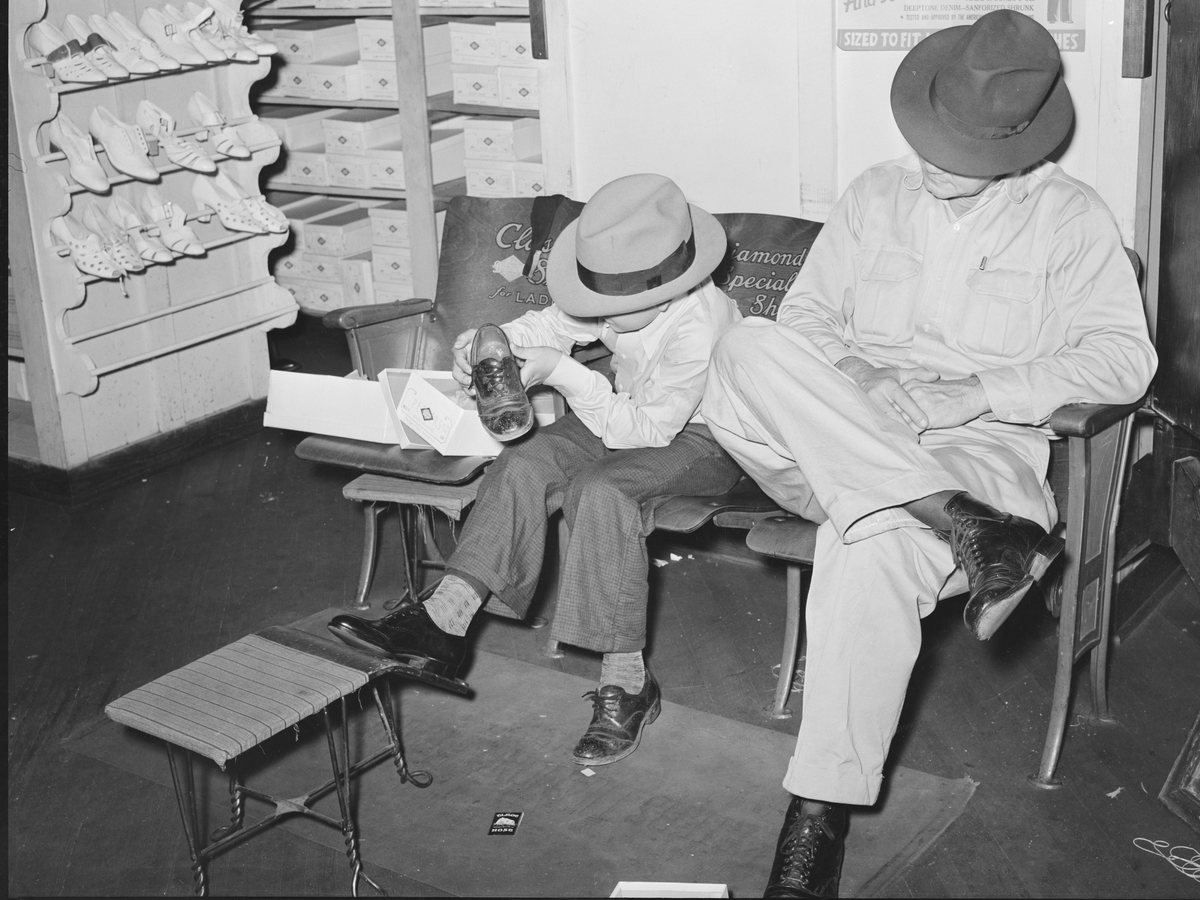
Trying on a new pair of shoes, San Augustine, Texas. A free trial is the software version of trying something on before paying.
Photo: Russell Lee for the U.S. Farm Security Administration / Office of War Information. Library of Congress catalogue page. No known restrictions; cropped and shown in grey.
Free trials
Guest limits in Teams, Google Chat and Notion
Teams meetings hold up to 300 or 1,000 people by plan, Google Chat needs Chat turned on to reach people, and Notion guests can expire within a year.
3 billing units set the bill: events, users, submissions
Learn how events, users and submissions set a trial's bill, using the free allowances and starting prices vendors publish.
4 rules for when an emailed UK notice counts as given
Under the UK subscription rules, an emailed notice to a consumer counts as given when it is sent, and the trader must prove it was given.
Mailchimp trial length: 14 days or 1 month by plan
Mailchimp's pricing page pairs a 14-day trial with Standard and a 1-month Premium trial limited to qualified new customers. Compare both terms.
Mailchimp free trial: 4 conditions and a 90-day window
The Mailchimp free trial has four conditions covering customer status, a 90-day account window, select countries, and plan sign-up.
4 Jotform enterprise page figures to test before a trial
Each one is a vendor claim, so treat them as questions to put to a trial rather than proof that the product will fit your team.
3 usage examples showing logged units as a charge
Three worked examples from billing docs show how logged units become the quantity a customer is charged for, plus a tiered free-unit case.
3 Recurly webhook timing figures for a trial test
Three Recurly webhook timing figures for a free-trial test: sandbox delays up to 48 hours, 15-day retention, and 24-hour key overlap.
Recurly card check at signup: $1.00 or $0.00
Recurly runs a $1.00 authorization or a $0.00 verification when billing details are added. The gateway behind your account decides which one customers see.
Recurly item catalog: 3 setup facts to confirm first
Confirm item catalog is enabled, your API version, and your Item ID format before you add a trial add-on or one-time charge in Recurly.
Sandbox signup tests: 3 limits to plan for launch day
Sandbox signup tests can shift results: delay accounts change state after about 3 minutes, and 429 errors mean slowing requests.
3 date caps for a trial signup report
HubSpot's 90-day restore filter, Microsoft's up-to-30-day restore period and Zendesk's Deleted tickets view, each limited to its product.
Card trial costs: 3 parts of a payment form price
A card-required free trial has three cost layers: your gateway's standard rate, the form builder's fee position, and recovery on failed charges.
UK digital content cancellation right: 3 trial clauses
How the UK digital content cancellation right applies to free trials, plus three clauses and a sign-up flow check for growth teams.
2 resume cases for a paused subscription date
In Chargebee's example, a subscription resumed after its next renewal has its renewal moved to the resume day. Paused MRR counts as $0.
5 checks for card testing on a card-required trial
Five practical checks for spotting card testing on a card-required free trial, from failed-charge spikes to hourly attempt limits and bot scores.
5 HubSpot quote limits to check before an order form
HubSpot caps attachments at 10 and line items at 500. Check these quote limits, PDF size rules and invoice timing before sending an order form.
3 outcomes when a second coupon meets a subscription
What happens to a subscription total when a second coupon arrives: replacement, a $0 minimum, and discount dates to check before launch.
2 Google refresh credential revocation cases for trial logins
Two Google refresh credential revocation conditions trial logins must handle: six months idle and a password change while Gmail scopes are held.
2 backdate examples Stripe shows for a mid-month start
Walk through Stripe's two backdated subscription examples, month by month, to see exactly what the first invoice covers when a start date falls mid-month.
3 subscription levels to order tiers from most to least
Order your subscription tiers from most to least value, label levels clearly, and plan the updates that justify recurring charges at signup.
Scheduled plan upgrades: 3 billing outcomes on 20th May
Walk through the three billing outcomes a scheduled upgrade on 20th May can produce, and what your customer's invoice will show in each case.
UK cancel right: 3 rules for trial subscribers
Three sourced facts help trial and growth leads build UK cancellation flows that meet the 2024 Act's cancel, renewal and penalty rules.
3 handoffs from trial invite to sales lead
A practical guide for growth leads on the three handoffs that move a trial signup into a qualified sales lead, with examples of what each one should produce.
Stripe mid-cycle price change: 4 amounts explained
Stripe's mid-cycle price change example shows four amounts, and this post explains what each one means for the charges your customers see.
Prorated cancellation credit: $110 or $90 in 2 cases
Two cancel times on one subscription yield different prorated credits. See the billing day boundary rule and both worked calculations.
Last cancellation date: 6-month reminder rules in UK
How the six-month reminder cycle, last cancellation date and key facts work under the Digital Markets, Competition and Consumers Act 2024.
Coupon with 12 renewal periods covers 13 charges
A coupon set to 12 renewal periods on a monthly plan discounts the signup invoice plus 12 renewals, for 13 charges in total.
Free-trial auto-renewal: 3 state laws compared
Compare Virginia, North Carolina and Minnesota auto-renewal rules on consent, cancellation and refunds, including Virginia's free-trial instructions.
Signup trial price: 4 published examples to compare
Compare four published billing examples for tiers, seat bands, usage and add-ons, then choose a trial plan price before your signup form goes live.
Pipedrive daily API budget: 3 inputs to check
Learn how the plan multiplier, seat count and purchased top-ups set a Pipedrive daily API budget, with a checklist for trial setup.
3 price settings for an auto-renewable subscription trial
Three price settings decide what a free trial converts to: the renewal price, the intro offer, and the billing plan, with Apple's limits.
Plan caps before a free trial: 3 vendors compared
Compare Slack huddles, Webex meeting limits, and Microsoft Teams transcription caps so you know what a free trial can really test before you buy.
Two-month trial end dates: 8 checks before launch
A two-month trial starting February 28 ends April 28. Use eight checks to align your trial setup, customer messages, first invoice and reporting.
14-day trial dates: 3 steps from start to test
Set a 14-day trial's start and end dates, check the first charge separately, and test month-end billing before customers see the dates.
Trial coupons: 3 rules before the first paid bill
Check how trial coupons affect paid-plan discounts, hidden $0 invoices and unused credit, then test the offer before the first paid bill arrives.
Invoice link expiry: 3 billing date checks
Check Stripe invoice link expiry, Chargebee's scheduling horizon and Recurly pause dates before planning payment links and subscription changes.
GrowthBook revenue caps: 6 steps for trial tests
Set absolute or percentile caps on user revenue in GrowthBook. Follow six steps for trials with setup fees, and check floor settings separately.
Free and paid trials: 5 steps for a fair comparison
Compare free and paid trials with five test steps, billing states, reminder timing, and measures that show which offer brings paying customers.
Verify webhook senders: 4 checks before trial events
Check webhook signatures, stored secrets, event IDs and payload versions before a billing event starts a trial, sends an email or changes an account.
Payment recovery: 8 rules for a billing stack
Use 8 payment recovery rules to set dunning triggers, retries, invoice states, renewal timing, and a 50-campaign limit today.
Checkout recovery email: 5 checks before you enable it
Review five checks for consent, expiry, objections, bounces, and capacity before enabling your abandoned trial checkout recovery workflow.
Free-trial auto-renew rules: 4 sources compared
Federal, California, New York, and Oregon quotes on price disclosure, consent, notice timing, and how to cancel a free trial.
Configure 6 trial settings for a SaaS billing stack
Set 6 SaaS trial settings: duration, payment method, abuse checks, conversion, billing dates, and product setup, with sourced platform rules.
How 5 billing tools start a free trial without a card
See how 5 billing tools document a free trial without a card, where trial length is stored, and what happens when no card is on file.